
Sep 26, 2026
Read More >>
Quick Answer: Small businesses can compete with big brands in local search by being more relevant to a specific area, service, and customer need. Strong service pages, an accurate Google Business Profile, useful local content, steady reviews, and a technically sound website can help a local company earn visibility even when national brands have larger budgets.
Large companies often have stronger domain authority, bigger advertising budgets, and more backlinks. Local businesses have a different advantage: they can create pages and information that closely match what people in Lexington, Columbia, and nearby communities are actually searching for. A focused local SEO strategy gives search engines clearer reasons to show a nearby business for location-based searches.
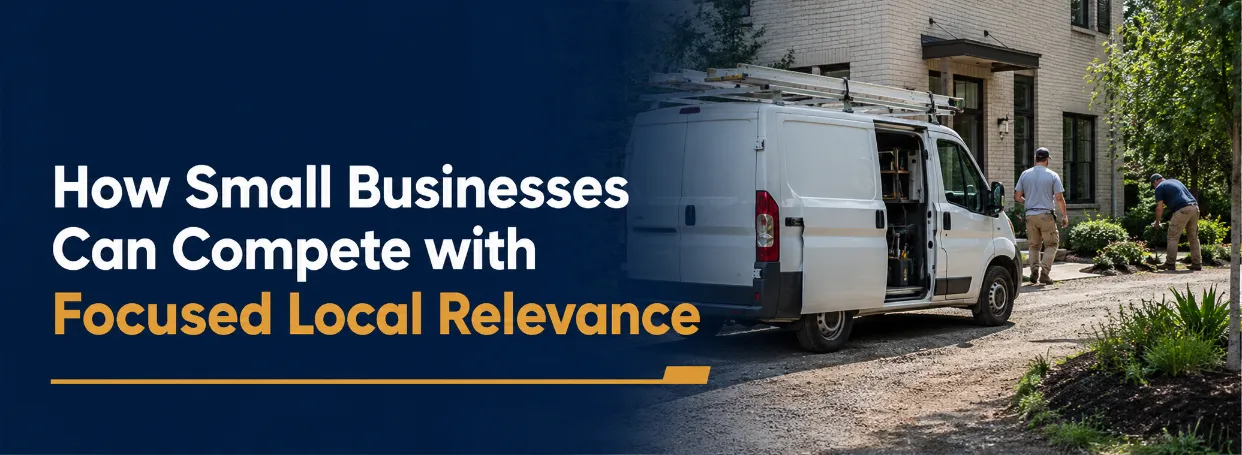
Be More Specific Than the National Competitor
A national brand may use one broad page to target an entire state. A local company can build focused service pages that explain exactly what it provides, where it works, common customer concerns, and what makes the service appropriate for the local market. The goal is not to repeat city names. It is to provide useful details that a broad corporate page cannot easily match.
Build Pages Around Real Search Intent
A page should answer the question behind the search. Someone looking for emergency repair help needs different information than someone comparing long-term service plans. Clear headings, service details, pricing factors, FAQs, photos, trust signals, and direct contact options make the page more useful for both visitors and search engines.
Make the Website Easy to Trust and Use
Local visibility does little good when the website is slow, confusing, outdated, or difficult to use on a phone. Professional website design should support fast loading, readable content, clear navigation, accessible forms, visible phone numbers, and strong service-page structure. Big brands sometimes rely on name recognition. A smaller business must quickly show that it is credible, local, and easy to contact.
Use Local Proof That Big Brands Cannot Copy
Photos of completed work, staff experience, recognizable service areas, locally relevant FAQs, case examples, and genuine customer reviews can make a page more convincing. These details also help distinguish original local content from generic service descriptions used across hundreds of locations.
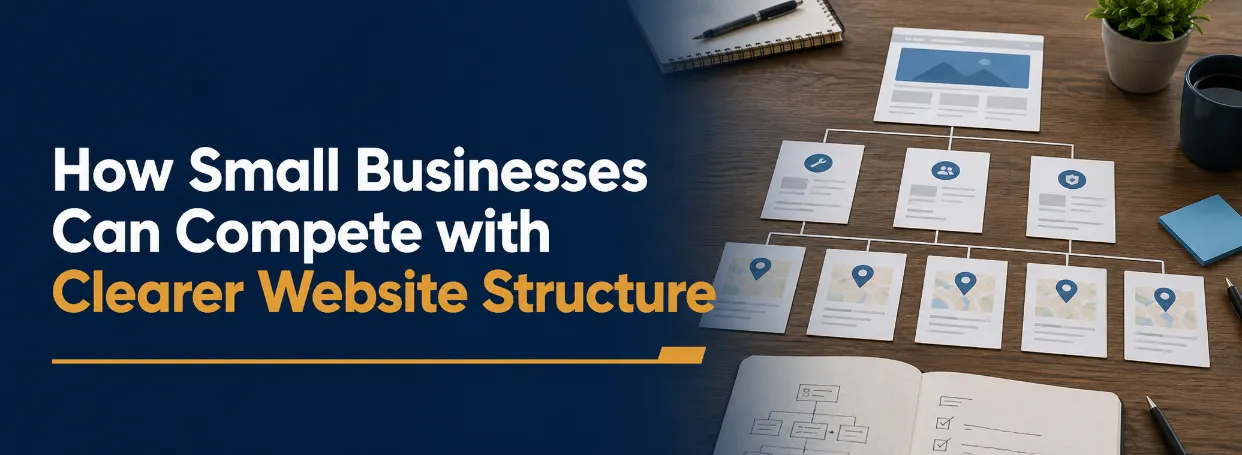
Why This Matters
Local search is often decided by relevance, proximity, reputation, website quality, and how well a business answers the searcher’s need. A smaller company does not need to outrank a national brand everywhere. It needs to be a stronger result for the right service in the right community.
Common Mistakes
- Creating thin city pages that only swap location names
- Using the same generic service copy found on competing websites
- Ignoring mobile speed, broken links, weak calls to action, or inaccurate business information
Best Practices
- Keep business names, addresses, phone numbers, hours, and service details consistent
- Request honest reviews and respond professionally without using incentives that violate platform rules
- Publish useful articles that support core service pages and answer real customer questions through practical small business website tips
Local Relevance
Competition in Lexington, Columbia, West Columbia, Irmo, Cayce, Forest Acres, and Chapin varies by industry. A practical approach is to strengthen the main service pages first, then add local content only where the business has something useful and specific to say. This creates a cleaner website than producing dozens of nearly identical location pages.
When to Contact a Professional
Professional help may be worthwhile when rankings have stalled, service pages are poorly organized, the website has technical problems, or the business is unsure which searches are likely to produce qualified leads. Business owners can ask about SEO services to identify content gaps, local visibility issues, internal-link opportunities, and technical barriers before more money is spent on random changes.
Final Thoughts
Big brands may have more resources, but local businesses can compete through accuracy, focus, useful content, strong reviews, and a website built around real customers. Digital Marketing Systems helps businesses evaluate practical local SEO improvements without promising instant rankings. A focused review can establish which pages, technical fixes, and content updates deserve attention first.
Frequently Asked Questions
Can a small business outrank a national brand in local search?
Yes. A small business may outrank a national company for particular local searches when its page is more relevant, useful, trustworthy, and closely connected to the searcher’s location. Results still depend on competition, website quality, reputation, and other ranking factors.
What local SEO work should a small business do first?
Start with accurate business information, a complete Google Business Profile, strong primary service pages, mobile usability, clear contact information, and genuine customer reviews. Technical problems that prevent crawling or slow down the website should also be addressed.
Does a business need a separate page for every city it serves?
No. A city page should exist only when the business can provide useful, location-specific information. Producing many nearly identical pages with swapped city names can create a weak website and may not help visitors.
How important are customer reviews for local search?
Reviews can support trust and local visibility, especially when they are recent, genuine, and connected to the services being offered. Reviews are one factor in a broader strategy and do not guarantee a particular ranking.
How long does local SEO take to produce results?
There is no fixed timeline. Progress depends on the market, competition, website history, existing rankings, content quality, backlinks, technical condition, and the amount of work required. Meaningful improvement usually requires consistent long-term effort.