Oct 10, 2026
Read More >>
Understanding What Customers Want Through Specific Searches
Quick Answer: Long-tail keywords are search terms which typically receive fewer searches each month and indicate a specific, well-defined requirement. Employing them can enable your website to respond to actual questions from your customers. Yet simply making a keyword longer does not mean that it becomes more valuable or easier to rank for.
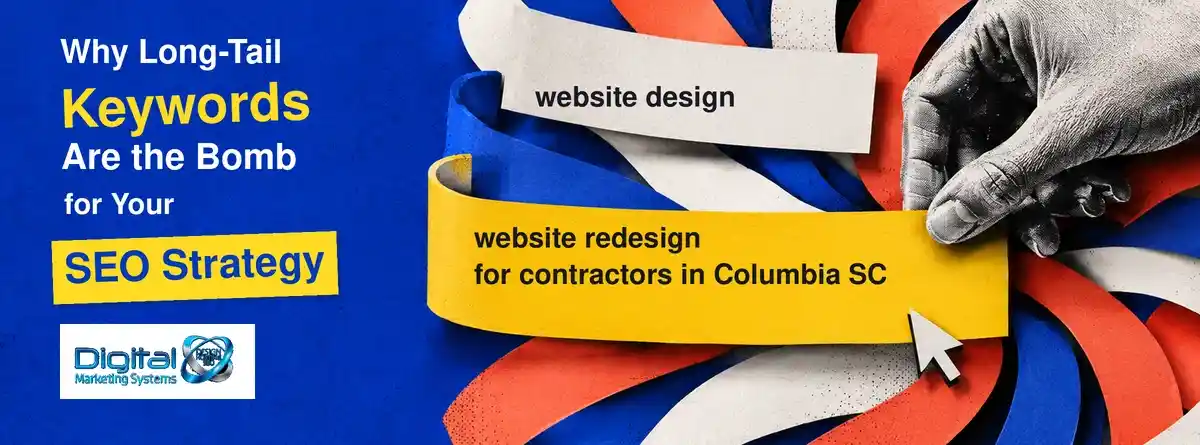
When you look up "website design", the term is rather general. However, if you use something like "website redesign for a small business in Lexington SC", you know precisely what the person wants and where they are based. This is the reason it makes sense to include long-tail keywords in your SEO strategy SEO strategy. The objective is to ensure that the correct page is matched with the individual who needs your services.
Look Beyond the Number of Words
The concept of the "long tail" is actually concerned with the number of people who search for a particular phrase, not with the number of words in the phrase. Certain short phrases don't enjoy much popularity, while some longer questions do get a high volume of searches. It's possible for very specific searches to have little competition, yet some important service keywords can still be difficult to rank for.
The purpose of a search is also important. For instance, if someone is asking how to build a website, their aim may be to obtain a guide. But if they are looking for information in order to compare different website redesign services, they are most likely thinking of hiring a specialist. Although both kinds of search are useful when planning your content, you will have to respond to them in different ways.
Start With Real Customer Questions

Write down the real questions that people ask you—whether in the course of phone calls, when requesting quotes, or in everyday conversations. When doing so, consider the problems they are addressing and the specific details that affect their decisions. Keep the exact words they use before you attempt to rephrase them in business terms.
- Service and location: "a small business website redesign in Lexington SC".
- Problem and context: Why is my business website slow when accessed on a mobile device?
- Service and audience: Website design for contractors based in Columbia, SC.
These are merely suggestions for research—not actual search figures. To find out what people are looking for, check the search results and then compare those needs with your own offerings. Keyword tools should be used as a guide, not as a guarantee.
Give Each Search Intent a Useful Page
Group phrases that are similar under one customer need. For instance, an effective page on redesigning websites could include topics such as old layouts, mobile-friendly design, organising the content, and how to request a quote—there being no need to create a separate page for each slightly different phrase.
Ensure that your main topic appears naturally in the title, the headings, and the opening paragraph. Use straightforward subheadings, include real-life examples, provide accurate page information, and add useful links to other sections of your site. According to Google’s SEO Starter Guide, their search systems are able to connect your page with different search queries—therefore, you don’t need to include every exact phrase.
With our custom website design process, you have a real place for this kind of content. A focused service page should clearly describe what you offer and make it easy for people to contact you—especially on their phone.
Measure Inquiries, Not Just Visits
Find out which pages are found and which ones are clicked on in search results, and then check whether those visits correspond to phone calls or contact forms (if you are able to track them). For instance, a plant nursery succeeds when a question concerning a plant results in someone asking about something that it actually sells.
Google Search Console provides information about the searches people have carried out and the pages they ended up on, but as Google's documentation states in its support materials, certain rare searches are concealed for privacy reasons. The fact that you do not see a phrase does not mean that nobody searched for it.
Avoid Thin Pages and Forced Repetition
Do not create pages that are almost identical in order to target different towns or repeatedly use the same phrase throughout. Begin with improving the page that is most relevant; search rankings also take into account the level of competition, the helpfulness of your content, your website's technical arrangement, your backlinks, your location, your site's history, and the way search engines evolve over time.
Pick a service you want to grow, write down five real questions customers have asked, and look at the page that should answer them. Add anything that’s missing, include a useful example, and make sure there’s a clear next step. Watch how things perform before you create a new article or service page.
If you're looking for more ideas regarding content, why not visit our website design and SEO tips? If you're unsure about which customer questions to begin with, get in touch with Digital Marketing Systems at (803) 233-3547. We can help turn customer questions into an actionable plan for your business in Lexington or Columbia.
Frequently Asked Questions
How many words should a long-tail keyword have?
There is no fixed number; the term long-tail means that the keyword isn't searched for very frequently, although it generally consists of a few words.
Is it always easy to rank for long-tail keywords?
Not at all. It all comes down to the level of competition, what people are looking for, the quality of your page, and the fact that other websites are already ranking. A highly specific keyword can still be competitive.
Do I need a different page for every keyword?
No. Put similar phrases with the same goal on one helpful page. Only make a new page when the customer need is truly different.