Oct 22, 2026
Read More >>
Quick Answer
Social media links can help Columbia businesses build visibility, trust, and referral traffic, but they do not directly guarantee higher Google rankings. Accurate social profiles, helpful website content, and a well-maintained Google Business Profile work together to help customers find and contact your business.
Social Links Can Help People Find You—But They Are Not a Ranking Shortcut
Adding links to Facebook, Instagram, or LinkedIn on your website doesn't guarantee a higher placement for Columbia businesses in Google search results. Google has not listed social media shares or follower numbers as direct factors for local rankings. The main benefit is making your business more visible, recognizable, and trustworthy where your customers already spend time.
This difference is important for businesses in Columbia, Lexington, and the Midlands area. While a social media profile can help people find your business, your website and Google Business Profile must provide up-to-date information and prompt, helpful responses for people ready to get in touch.
Connect Social Profiles to Your Real Business Identity
Begin by confirming your social profiles clearly represent the business featured on your website. Make sure you use the correct business name, link to the right website page, and maintain consistent contact information. This step is crucial if outdated accounts, duplicates, or an old website still show up in search results for your brand.
Place your social links in locations where customers will find them useful, like in the footer or on the contact page. Avoid crowding your homepage with multiple social widgets or feeds; these can slow your site down and rarely help visitors. Usually, a simple link is all you need.
Make Social Posts Worth Following Back to Your Website
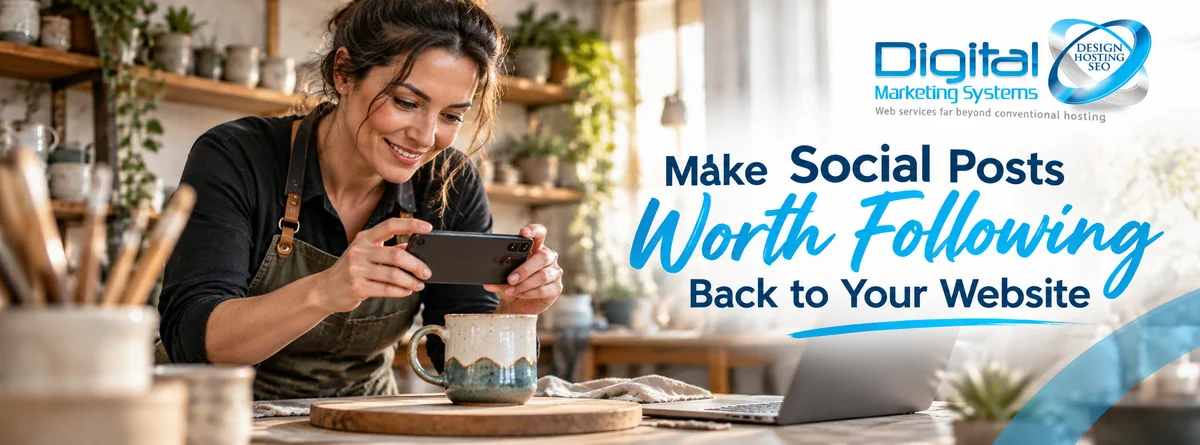
Effective social posts should encourage people to visit a relevant page on your website. For example, a Columbia-based service business could post before-and-after project photos with a link to service details. Professionals might answer common customer questions and direct readers to a comprehensive explanation on their site. Social content sparks interest, while your website provides the in-depth information needed for customers to decide.
Craft clear captions, use your own images when possible, and direct links to the most relevant page—not just your homepage. When a post brings engaged visitors to a focused service page, it can generate business benefits, even if it doesn't directly affect search rankings.
Keep Your Google Business Profile Strong
Google reports that local rankings are mostly determined by relevance, distance, and prominence. It's more important to ensure your categories, services, contact details, and reviews are accurate before focusing too much on social engagement. When possible, link your verified social accounts to your Google Business Profile so customers can easily identify your business across different platforms.
Google also notes that content from social and video platforms may show up in Search and provides Search Console reports for qualified social properties. This opens another way for people to find you through search, but it doesn’t mean all social links will boost your website’s ranking.
Measure Visitors and Inquiries, Not Just Likes
Whenever possible, use trackable URLs for the links you share, then check analytics for visits and engagement from social media. Watch for actions like completed forms, phone calls, or time spent on key pages. Sometimes, a post with fewer likes can bring in more valuable leads than a widely shared one if it reaches the right audience.
Track your search performance separately. Use Google Search Console to see which of your web pages attract impressions and clicks from Google Search. If your website traffic increases after a social media campaign, it’s worth noting, but the timing alone doesn’t confirm social links were the cause.
Give Each Channel a Clear Job
Most small businesses benefit from choosing only the social channels their customers use most and posting updates they can keep up with. Consistent sharing of recent projects, useful tips, and company updates is far more valuable than spreading yourself thin across many rarely updated profiles.
To maintain strong local visibility, combine your social media efforts with detailed service pages, a smooth mobile experience, and a well-managed Business Profile. Digital Marketing Systems assists Midlands companies in connecting these elements through local SEO services and website consultations. It's also helpful to review Google's local ranking advice and its social-content search reporting documentation.
Not sure which social channels to focus on? Contact Digital Marketing Systems to discuss how local customers currently find your business and what steps can help you grow next.
Frequently Asked Questions
Do social media links directly improve Google rankings?
Adding social media links to your website does not guarantee higher Google rankings. These links can help customers discover your business, recognize your brand, and visit relevant website pages.
Should my Columbia business include social media links on its website?
Yes, when the accounts are active, accurate, and useful to customers. Place links in convenient locations such as your footer or contact page without adding unnecessary widgets that could slow your website.
Can Facebook, Instagram, or other social media posts appear in Google Search?
Yes. Google can display content from certain social and video platforms in search results. This creates additional opportunities for people to discover your business, although visibility varies by platform, content, and search query.
What is more important than social media links for local SEO in Columbia SC?
Start with accurate Google Business Profile information, useful service pages, consistent business details, positive customer reviews, and a fast, mobile-friendly website. These support a stronger foundation for local search visibility.
How can I measure whether social media is helping my business?
Use website analytics and trackable links to measure social referral visits, contact form submissions, phone inquiries, and engagement with important pages. Review Google Search Console separately to monitor organic search performance.