Oct 22, 2026
Read More >>
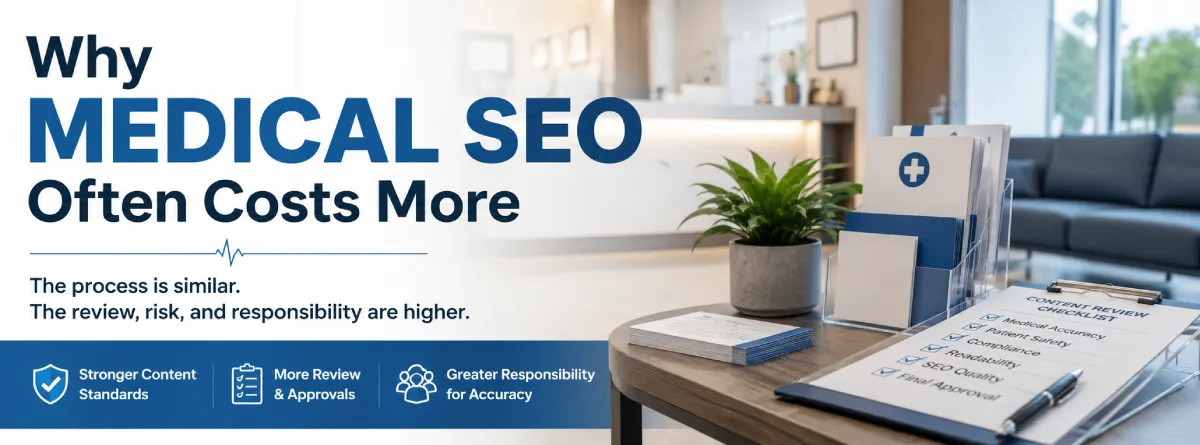
Quick Answer: Some SEO providers charge more for medical SEO because the review process, content sensitivity, approval time, and risk are often higher. The core SEO work is still familiar: keyword research, page structure, technical cleanup, content planning, internal links, metadata, and local visibility. The difference is usually not a secret medical-only SEO method; it is the added caution around healthcare content.
Medical SEO can sound more mysterious than it really is. A medical practice still needs clear pages, useful content, strong metadata, crawlable code, fast loading, mobile usability, and local relevance. Those same basics apply to contractors, law firms, restaurants, real estate companies, home service businesses, and other local companies using SEO services in Lexington, Columbia, and across South Carolina.
The SEO Process Is Mostly the Same
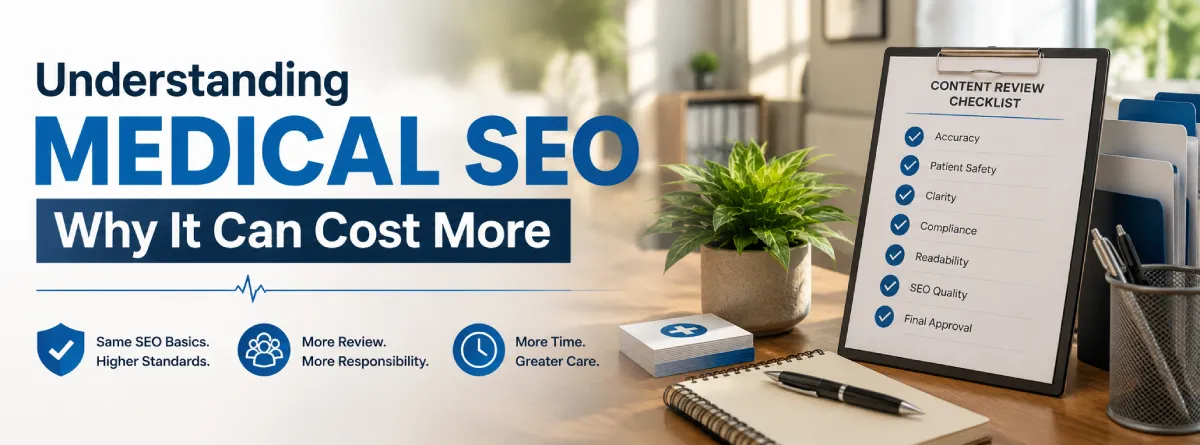
SEO does not become a completely different service because the client is a medical office. A provider still has to understand search intent, build useful page topics, clean up technical issues, improve headings, write better title tags and descriptions, organize internal links, and support the website with helpful content over time.
The same is true for keyword SEO blogs. A blog post should answer a real question, stay focused, support a service page when appropriate, and avoid filler. That applies whether the topic is HVAC repair, pool service, website design, or medical office information. The structure is not magic. The quality of the thinking matters more than the industry label.
Where Medical SEO Can Take More Time
The extra cost often comes from what happens around the SEO work. Medical content may need more careful wording, more review, and more approvals before publishing. A sentence that sounds harmless in a general blog may be too close to medical advice, patient-specific guidance, or a claim that should be reviewed by the practice.
That does not mean every medical blog should be expensive. It does mean the writer and SEO provider should know where the boundary is. In many cases, the safer approach is to write educational, search-friendly content that explains services, answers general questions, and supports patient understanding without making clinical claims or touching private patient information.
Why Some Agencies Price It Higher
Some agencies charge more because healthcare is often treated as a higher-risk category. They may build in time for content review, compliance-aware editing, reputation concerns, provider approval, source checking, and revisions from office staff. That added workflow can justify higher pricing when it is real and clearly explained.
The problem is when “medical SEO” is used as a label to inflate the price without adding meaningful work. If the provider is doing the same keyword list, the same generic blog format, and the same basic metadata with no additional review, strategy, or care, the higher price should be questioned.
What Medical SEO Should Not Do
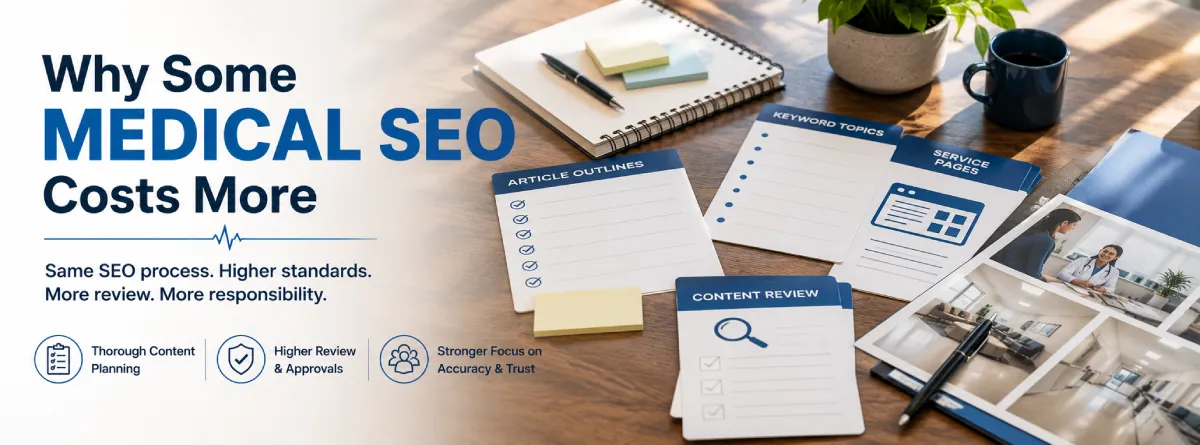
Medical SEO content should not pretend to diagnose, replace a provider, discuss private patient matters, or make promises about outcomes. It should also avoid overly promotional language that reads like advertising rather than helpful information. For healthcare-related websites, the goal is usually to explain services clearly, help visitors understand next steps, and make the website easier to find and use.
This is where SEO-focused website design also matters. A medical website with confusing navigation, thin service pages, slow mobile loading, weak trust signals, or poor accessibility can struggle even if the blog posts are well written.
Why This Matters
Business owners should understand what they are paying for. If a medical SEO provider charges more, they should be able to explain the added value in plain language: better reviews, better research, clearer content boundaries, stronger technical structure, stronger local pages, or more careful approval handling. “Because it is medical” is not enough by itself.
Common Mistakes
- Assuming medical SEO requires a completely different SEO process.
- Paying more without asking what extra work is included.
- Publishing healthcare content that sounds like clinical advice instead of general educational information.
- Writing generic keyword blogs that do not support real service pages or local search intent.
Best Practices
- Use clear service pages that explain what the practice offers and who it serves.
- Write general educational content that avoids patient-specific or clinical claims.
- Have the medical office review sensitive content before it goes live.
- Support the site with clean metadata, internal links, mobile usability, accessibility, and technical SEO.
Local Relevance
For medical offices and professional practices in Lexington, Columbia, West Columbia, Irmo, Cayce, Forest Acres, Chapin, and the Midlands, local SEO still depends on relevance and clarity. The website should help people understand the services, location, appointment path, office details, and reasons to trust the practice. More helpful articles are available on the website design and SEO tips section of the Digital Marketing Systems website.
When to Contact a Professional
If your website needs better service pages, cleaner metadata, stronger keyword SEO blogs, or a more careful content plan, it may be time to have the site reviewed. A practical SEO provider should explain what work is being done, why it matters, and what should be handled carefully for your industry.
Final Thoughts
Medical SEO can cost more when the added cost reflects real review time, careful wording, approval steps, and stronger content planning. But the foundation is still SEO: useful content, clean structure, technical quality, local relevance, and realistic expectations. To talk through a practical SEO plan for your business or practice, ask about SEO services from Digital Marketing Systems.
Frequently Asked Questions
Is medical SEO different from regular SEO?
The core SEO process is mostly the same. Medical SEO often requires more careful content review, better wording, and stronger attention to claims, trust, and approval steps.
Why do agencies charge more for medical SEO?
Some agencies charge more because healthcare content may need additional review, compliance-aware editing, practice approval, and more cautious writing. The higher price should be tied to real extra work.
Should medical SEO blogs give health advice?
No. Medical SEO blogs should usually stay educational and general. They should not diagnose, discuss private patient information, or replace guidance from a qualified healthcare provider.
Are keyword SEO blogs still useful for medical websites?
Yes, when they answer real questions, support service pages, and avoid thin or generic content. Keyword SEO blogs should be written for people first, with search structure built in naturally.
Can Digital Marketing Systems help with medical SEO content?
Digital Marketing Systems can help with SEO structure, keyword planning, metadata, and general website content. Sensitive medical content should be reviewed by the practice before publishing.